

Q&A
- +1
Sheena Chestnut Greitens, Oriana Skylar Mastro, Yukon Huang, …
{
  "authors": [
    "Tong Zhao"
  ],
  "type": "other",
  "centerAffiliationAll": "dc",
  "centers": [
    "Carnegie Endowment for International Peace",
    "Carnegie China"
  ],
  "collections": [],
  "englishNewsletterAll": "ctw",
  "nonEnglishNewsletterAll": "",
  "primaryCenter": "Carnegie China",
  "programAffiliation": "NPP",
  "programs": [
    "Nuclear Policy"
  ],
  "projects": [],
  "regions": [
    "East Asia",
    "China"
  ],
  "topics": [
    "Security",
    "Military",
    "Nuclear Policy"
  ]
}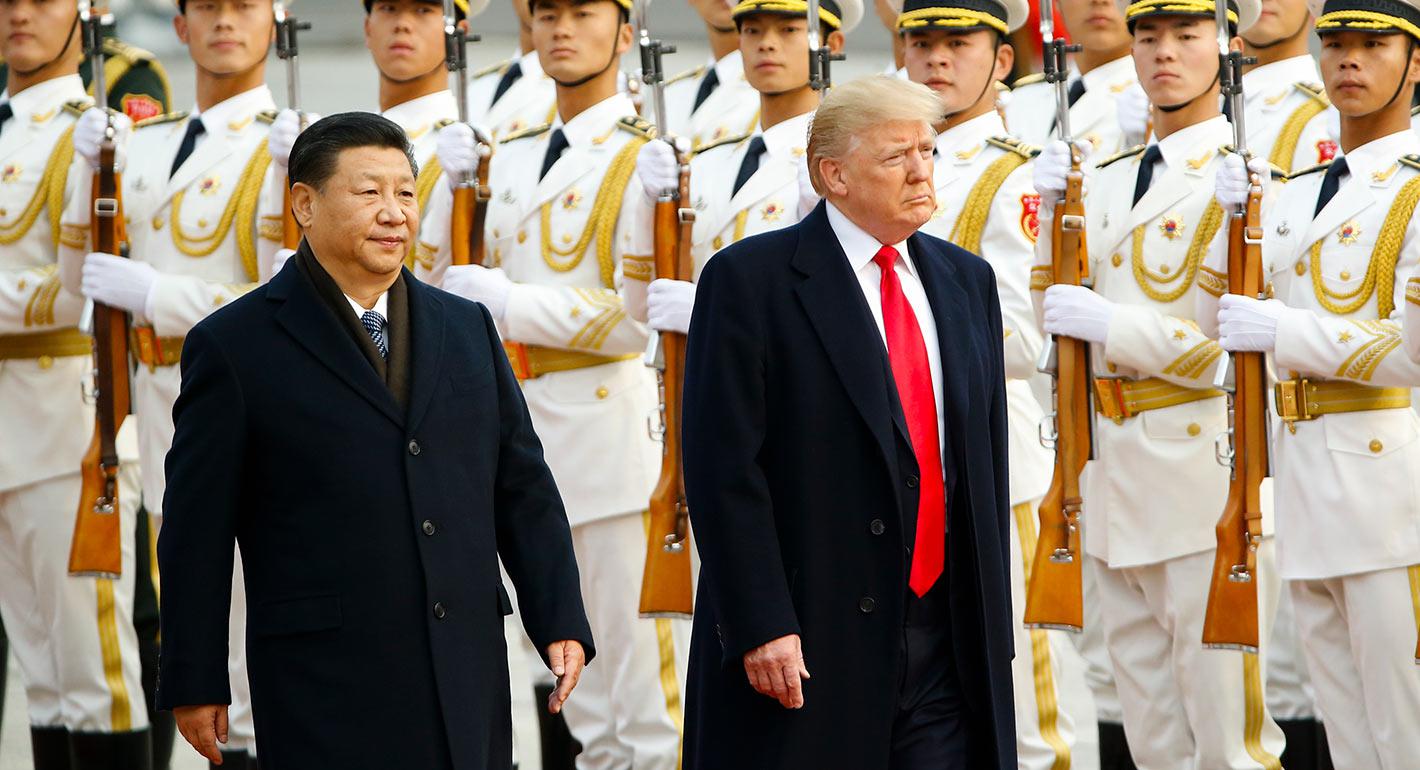
Source: Getty
Conventional long-range strike weapons of US allies may exacerbate Chinese concerns about the survivability of its small nuclear arsenal against a precision pre-emptive strike from the US-led coalition, although the degree of the new threat depends on various factors including the numbers and types of such weapons to be deployed.
Source: The Nonproliferation Review
Conventional long-range strike weapons of US allies may exacerbate Chinese concerns about the survivability of its small nuclear arsenal against a precision pre-emptive strike from the US-led coalition, although the degree of the new threat depends on various factors including the numbers and types of such weapons to be deployed. Conventional hypersonic missiles, in particular, may generate acute threat perception, as they can play the role of “door kicker” against China’s so-called anti-access, area-denial capabilities and pave the way for subsequent massive strikes with more traditional weapons. The development of conventional long-range-strike weapons by US allies also affects the risk of conventional conflicts escalating inadvertently to the nuclear level. Such risks are particularly salient in the Asia–Pacific region because of at least two factors: the ambiguous role of Chinese theater nuclear weapons and significant entanglement of conventional and nuclear capabilities at the theater level. Such conventional capabilities of US allies also help shape the region’s overall military balance—something China treats as part of its broader understanding of the term “strategic stability.” Regional players, however, have competing visions about what constitutes a stable military balance. They also have conflicting interpretations of why other parties are pursuing conventional long-range-strike weapons. The development of such capabilities will pose growing challenges to regional strategic stability in the future.

Senior Fellow with the Nuclear Policy Program and Carnegie China
Tong Zhao is a senior fellow with the Nuclear Policy Program and Carnegie China, Carnegie’s East Asia-based research center on contemporary China. Formerly based in Beijing, he now conducts research in Washington on strategic security issues.
Recent Work



Sheena Chestnut Greitens, Oriana Skylar Mastro, Yukon Huang, …
Carnegie does not take institutional positions on public policy issues; the views represented herein are those of the author(s) and do not necessarily reflect the views of Carnegie, its staff, or its trustees.

The nuclear relationship between China and the United States is increasingly shaped by widening perception gaps rather than deliberate strategic design.
Tong Zhao

China’s banking crisis in the 2000s was resolved by transferring the costs to households through financial repression—a decision that recapitalized the banks while exacerbating the structural imbalances that continue to shape the Chinese economy today.

Michael Pettis

Chinese biotech companies have been on the receiving end of U.S. economic coercion. Yet their responses have differed significantly because firm and state interests are not uniformly aligned. For Washington, treating all Chinese tech firms the same, irrespective of their actual interests, risks pushing them farther into Beijing’s corner.

Xue Gong

China’s latest energy plan explicitly calls for integrating data centers into the electricity system, particularly connecting them to green energy. It appears Beijing wants to use compute as a source of domestic demand to absorb renewables excess capacity.

Damien Ma

But their "principal to principal" model will only be as effective as the political strength of each leader back home.
Damien Ma